Revidia Therapeutics, Inc. is developing first-in-class small molecule drugs that activate intrinsic regenerative and repair mechanisms in damaged heart muscle.
Our lead drug candidate, MSI-1436, is the only small molecule in development that activates regeneration in the adult mammalian heart.
Duchenne muscular dystrophy (DMD) is an incurable rare muscle wasting disease. Heart failure is the leading cause of death for most DMD patients.... but there is hope.
Dilated cardiomyopathy and heart failure
DMD patients develop dilated cardiomyopathy that ultimately leads to heart failure. There are no approved therapies for DMD cardiomyopathy. Most DMD therapies under development focus on reducing skeletal muscle symptoms. Revidia’s first-to-clinic application of MSI-1436 will be as a treatment for DMD cardiomyopathy with multiple follow-on cardiac indications.
Unmet clinical need
DMD genetic and cell therapies have shown limited efficacy and have recently come under increased FDA scrutiny. Unlike small molecule drugs, cell and genetic therapies remain challenged by high cost and significant manufacturing and regulatory hurdles.
Revidia’s lead pipeline asset is MSI-1436, a first-in-class small molecule for activating intrinsic regenerative processes in the heart.
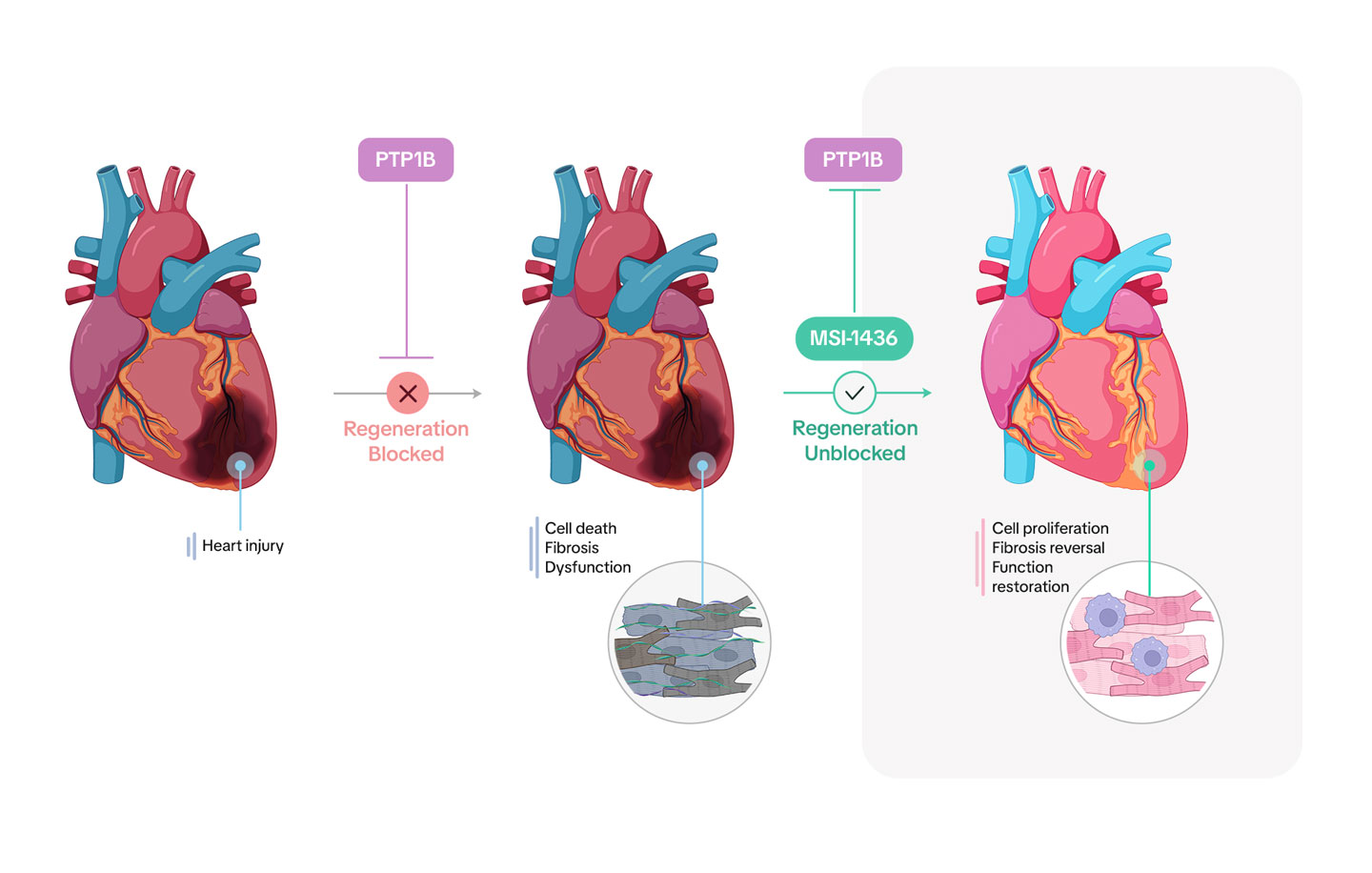
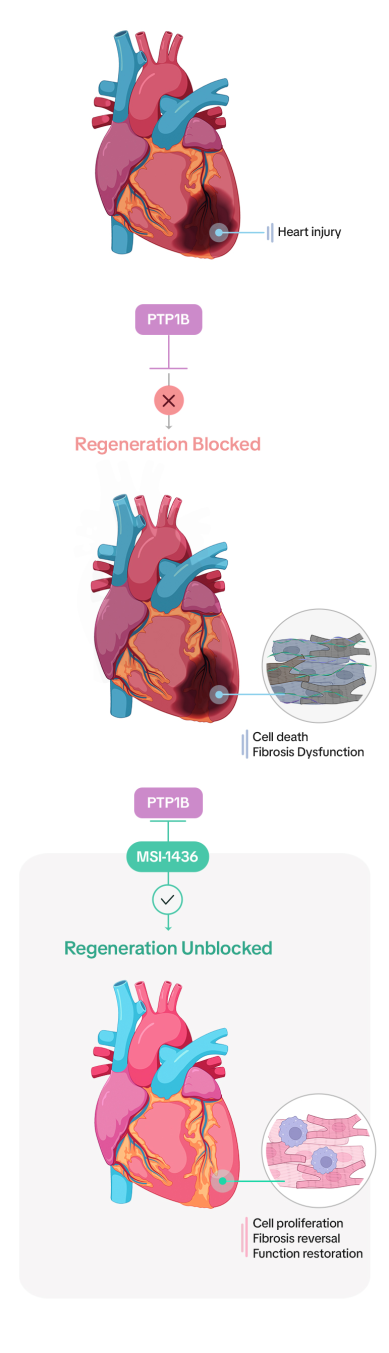
MSI-1436 selectively reduces the activity of protein tyrosine phosphatase 1B or PTP1B.
High levels of PTP1B activity function as a “molecular brake” on innate tissue repair and regeneration processes. MSI-1436 reduces PTP1B activity and releases that molecular brake.
MSI-1436 activates multiple, novel MOAs and restores the heart’s innate capacity for repair and regeneration lost postnatally.
MSI-1436 has established human safety with an estimated safety margin of up to 50-fold.
Sir Nilesh Samani, MD: Professor of Cardiology
at the University of Leicester
Williams, Oscar. “Drug Could Regenerate Damaged Tissue After A Heart Attack, Study Suggests.” HuffPost UK, 14 Mar. 2017.
Angela Russell, DPhil: Professor of Medicinal
Chemistry at the University of Oxford
A different approach, a shared goal:
Improving the lives of heart disease patients
Revidia Therapeutics was founded to address the limitations of current cardiac regenerative medicine R&D. Our paradigm shifting approach utilizes novel animal models to identify drug candidates with the ability to reactivate the innate regenerative capacity in damaged heart muscle.
We have assembled a team of experts dedicated to challenging the status quo in the treatment of heart injury. Our scientists, clinicians, and drug developers bring a wealth of experience and a shared passion for improving the lives of heart disease patients.

We are driven by a commitment to scientific excellence, patient-centricity, and a belief in the power of innovation to transform lives.
Dr. Kevin Strange is an internationally recognized biomedical scientist, and entrepreneur. His research has been funded for more than 35 years by the National Institutes of Health, Department of Defense, and private foundations, and has been published in leading scientific journals including Science, PNAS, Neuron and Cell. He is the recipient of numerous awards including the John C. Parker Endowed Chair and Pittinger Award for Excellence in Basic Research. Dr. Strange earned his Ph.D. from the University of British Columbia and conducted postdoctoral training in membrane and renal physiology at the National Institutes of Health. After a distinguished scientific and leadership career at Harvard Medical School and Vanderbilt University School of Medicine, Dr. Strange became the first president of the MDI Biological Laboratory in 2009 where he established the Kathryn W. Davis Center for Regenerative Biology and Medicine. The Davis Center was highlighted twice in the U.S. Congressional Record for its scientific accomplishments including the discovery of regenerative medicine drug candidates. Dr. Strange founded Revidia Therapeutics in 2013 to develop MSI-1436 and other small molecule regenerative medicine therapeutics.
Dr. Michael Christensen has spent more than 20 years in the pharmaceutical industry and has helped bring more than a dozen drugs to market, including Ozempic® (semaglutide), Tresiba® (insulin degludec), Isturisa® (osilodrostat), Recorlev® (levoketoconazole), Micardis® (telmisartan), and other drug products in the cardiometabolic space. He earned his Ph.D. in pharmacology at Vanderbilt University and completed his postdoctoral training in immunology at the Genomics Institute of the Novartis Research Foundation (GNF). Dr. Christensen’s experience at both large and small pharmaceutical companies includes clinical trial development and execution, regulatory and medical affairs, and business and marketing operations. He has worked extensively with regulatory bodies including the FDA, Medicare/Medicaid and Veterans Affairs. In addition to his role at Revidia, Dr. Christensen is also the President and Chairman of the Board of Directors at Prometheus Cardiology and Rare Disease, Inc.
Dr. Michael Stein is a cardiologist, well-published clinician scientist and experienced drug developer. He previously served as Vice President and Head of Study Medical Experts for Bayer Pharmaceuticals; Senior Director and Project Head of Clinical Development for Ikaria Biopharmaceuticals; Senior Director for Clinical Development at Novo Nordisk Pharmaceuticals; Senior Medical Director for Daiichi Sankyo; and Director of Cardiovascular Clinical Development at AstraZeneca. Dr. Stein has played key roles in bringing diverse therapies drugs to clinical practice including AZD6140/ticagrelor/Brilinta® and Prasugrel/Effient® for reducing clot formation in heart attack and stroke patients; Anti-TFPI antibody for improving coagulation in hemophilia patients; and IK5001 hydrogel for reduction or elimination of ventricular remodeling following large myocardial infarction. Dr. Stein received his M.D. from the University of Illinois and fellowship training in cardiology and interventional cardiology at the University of Iowa. He has served on the medical faculties at the of Wisconsin College of Medicine and Emory University College of Medicine. His basic research efforts have focused on diverse aspects of cardiovascular physiology and pathophysiology.
Dr. Richard Lee is a specialist in cardiovascular medicine and director of the Regenerative Medicine Center at Brigham and Women’s Hospital. He is also professor of medicine at Harvard Medical School and professor of Stem Cell and Regenerative Biology at Harvard University. His research focuses on developing new approaches for treating cardiovascular and metabolic diseases using genomics, stem cell biology, and molecular biology. Dr. Lee has published over 230 peer-reviewed articles based on his research and teaches undergraduates at Harvard College. He is the recipient of the prestigious National Institutes of Health Director’s Award.
Dr. Tom Rando is director of the UCLA Broad Stem Cell Research Center. His research focuses on muscle stem cell biology, with particular interests in stem cell aging and stem cell therapeutics. Dr. Rando pioneered studies using muscle stem cells to replace or restore functional muscle in preclinical studies of trauma and degenerative diseases such as muscular dystrophies. He has received numerous awards including the NIH Director’s Pioneer Award, the “Breakthroughs in Gerontology” Award from the American Federation for Aging Research, and a Transformative Research Award from the NIH.
Dr. Linda Cripe is professor of pediatrics and a pediatric cardiologist for The Heart Center at Nationwide Children’s Hospital. She is also a member of the physician team for the Neuromuscular Disorders section of the Nationwide Neurosciences Center. Dr. Cripe’s clinical interests focus on non-invasive cardiac imaging specifically echocardiography as well as on the care and treatment of cardiomyopathy associated with neuromuscular disease, such as Duchenne muscular dystrophy (DMD). She was a member of the Centers for Disease Control National Steering Committee Duchenne Muscular Dystrophy Standards of Care and has been an invited lecturer nationally and internationally on cardiomyopathy related to DMD. Dr. Cripe is currently a member of the Scientific Advisory Board for Parent Project Muscular Dystrophy (PPMD).
Dr. Jennifer Monti is a board-certified cardiologist subspecialized in cardiogenetic disorders of young adults. She received her undergraduate degree in biochemistry from Harvard College and degrees in medicine and public health from Case Western Reserve University, with residency and fellowship training at Johns Hopkins and the University of Pennsylvania. Dr. Monti’s research and clinical expertise include heart failure, vascular biology, sudden cardiac death, and public-private investments in emerging technologies and business development. She is the founder and CEO of Shock Analytics, on the health team @Meta, and an entrepreneur in residence at Northeastern University’s Roux Institute.
News Release 8 Jan 2025
Also awarded a small business innovation research grant from the National Heart, Lung, and Blood Institute.
Duchenne muscular dystrophy (DMD) is an X-linked orphan disease caused by mutations in the dystrophin gene, the largest and most complex gene in the human genome.
If you are interested in learning more about Revidia’s programs and investment and partnership opportunities, please fill out our form or contact us